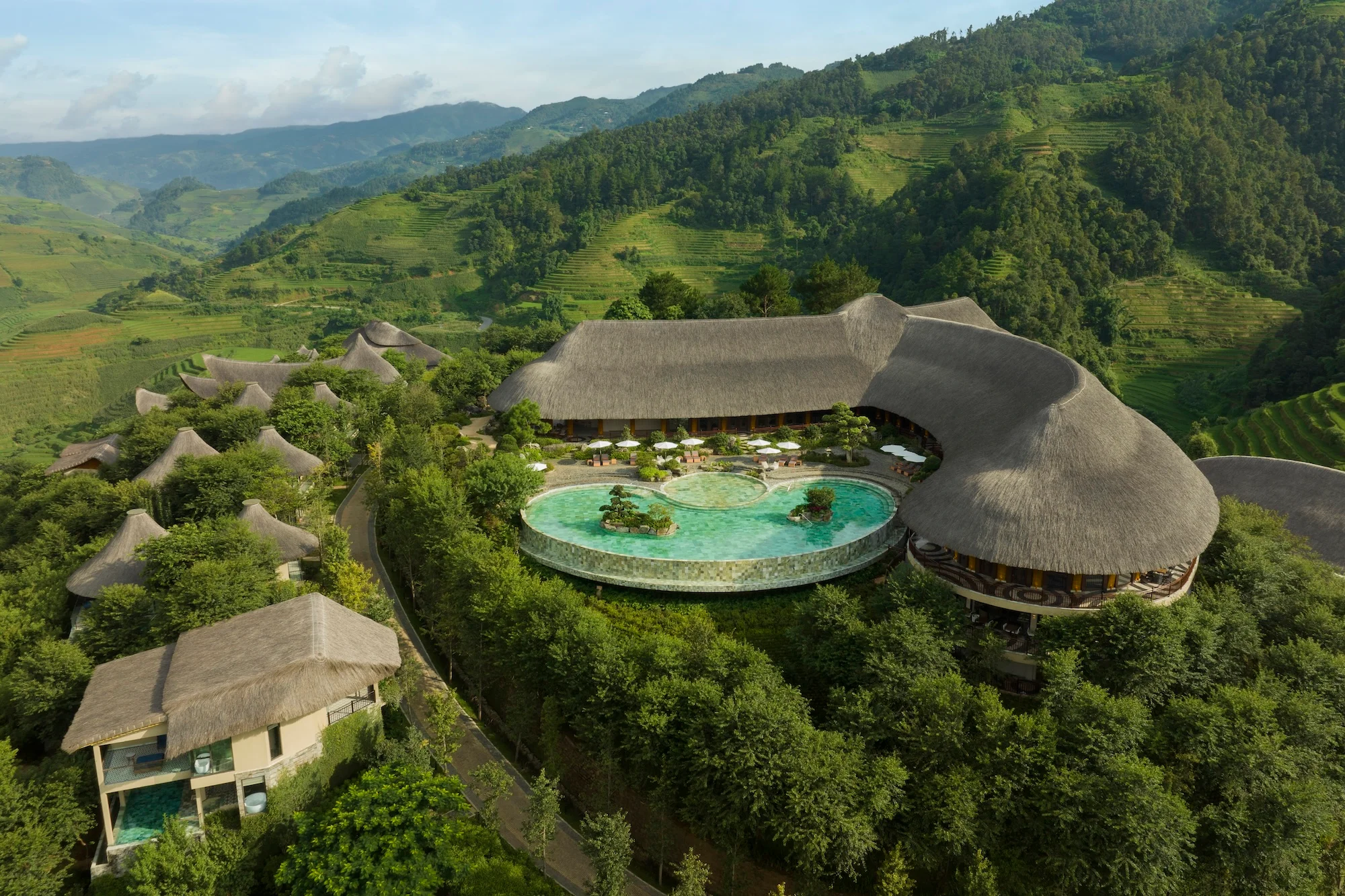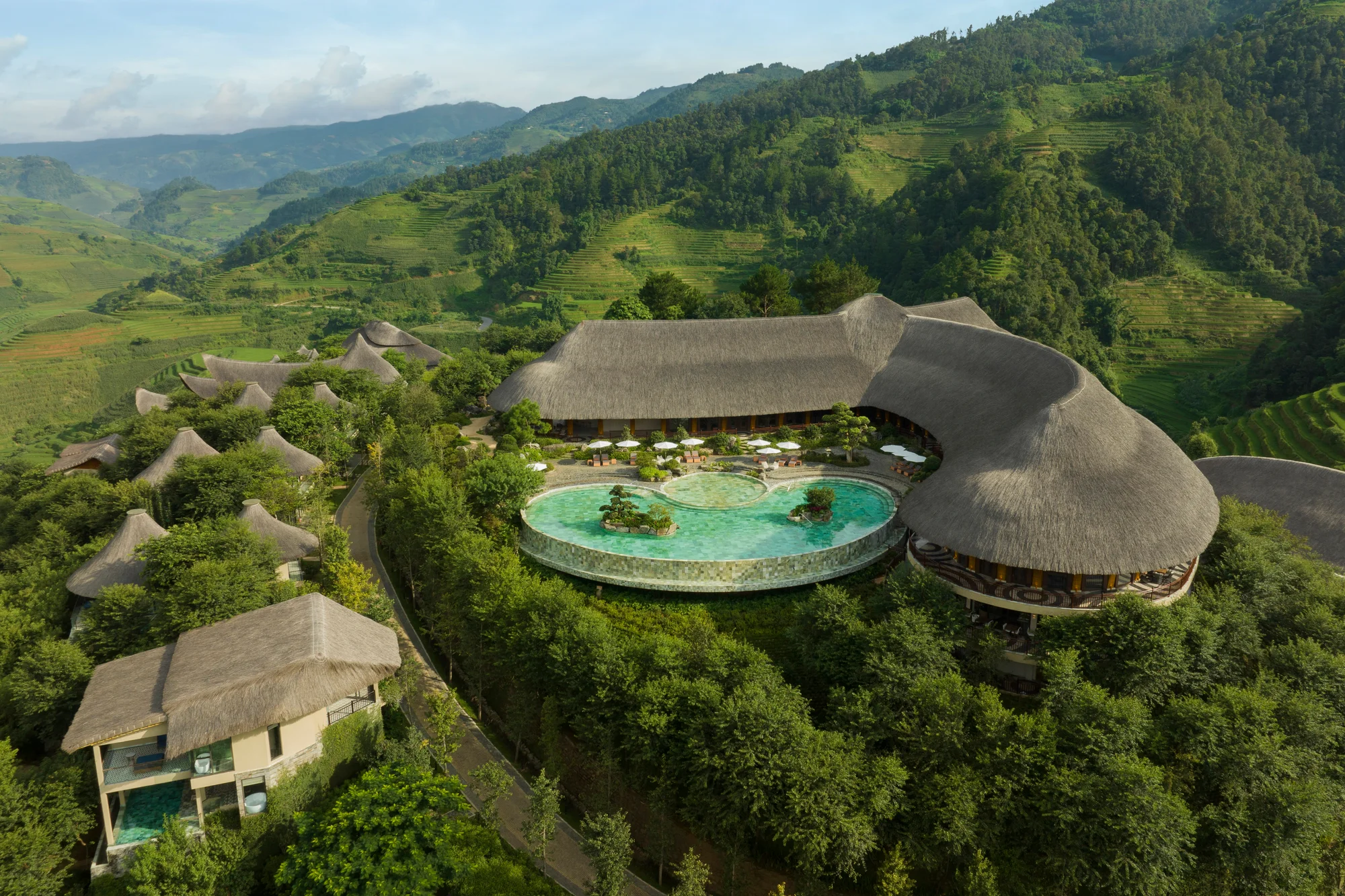
Garrya Mù Cang Chải, a Banyan Group property in Yen Bai Province in Vietnam's northern highlands, is set amid 400-year-old terraced rice fields cultivated by the local Hmong community and is recognized as the world's largest bamboo structure. Awarded World's Best New Wellness Resort in 2025, its wellness philosophy is built around a broader ethos of "simplified, mindful living," and centers on 8lements Spa, which follows Banyan Group's eight pillars of wellbeing across six double treatment rooms set within the surrounding natural landscape. Treatments draw heavily on local Hmong tradition and indigenous mountain herbs, and the spa includes a premium hydrotherapy system — infrared sauna, contrast plunge pools, rain mist walks and herbal steam — designed to restore balance and harmonize mind and body.
For 2026, the resort is expanding beyond self-directed spa visits into a more structured, results-focused wellbeing concept rooted in sports science, integrative nutrition and sleep optimisation. The new approach begins with a pre-arrival digital wellbeing assessment evaluating lifestyle patterns, stress levels and physiological condition, after which each guest is paired with a dedicated Wellbeing Trainer who builds a personalized itinerary — whether that leans toward restorative hydrotherapy, guided mountain trekking, or performance training supported by targeted nutrition plans and access to elite performance specialists. Enhancements supporting this shift include an upgraded 13-step hydrotherapy circuit, new Wellbeing Suites and Wellbeing Pool Suites with in-room training stations and recovery tools, integrated sleep-support technology, and curated nightly Sleep Rituals. New regionally inspired spa treatments include a Herbal Hair Wash using natural infusions and a Northwest Retreat Package featuring pumpkin, Shan Tuyết tea and local sticky rice.
Beyond the spa, wellness at Garrya extends into complimentary daily offerings: a panoramic gym overlooking the rice terraces, guided movement sessions, singing-bowl experiences, and barefoot grounding practices set across open decks and tranquil pathways throughout the resort. Culinary programming reinforces the same wellbeing focus — the all-day Refresh restaurant serves nutritious cuisine built on organic local ingredients and traditional Hmong farming methods, while a poolside bar offers lighter, health-conscious fare. Guests can also step outside the resort itself for guided treks, craft workshops, and storytelling sessions with local Hmong artisans and elders, tying the property's wellness identity directly to the surrounding culture and landscape rather than confining it to the spa building.