
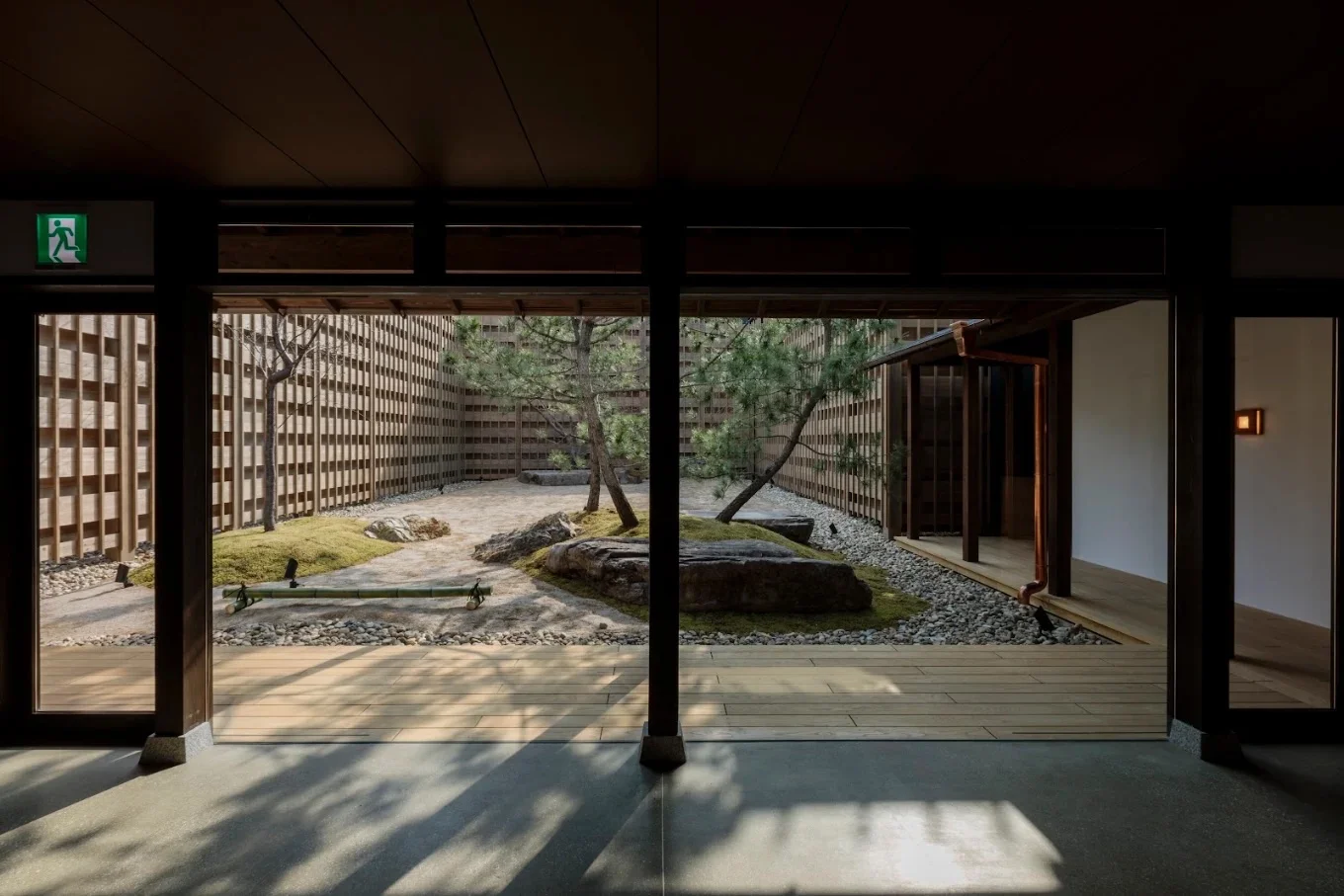
Azumi Setoda occupies a 140-year-old former merchant estate on Ikuchijima, a small citrus-growing island in the Seto Inland Sea, co-founded by Naru Developments and Adrian Zecha — the hotelier behind Aman Resorts — as the first property in his Azumi line. Kyoto architect Shiro Miura restored the 22-room compound, once home to the influential Horiuchi family, to balance traditional materials like washi paper, shikkui plaster and local granite with a minimal, contemporary sensibility. Wellness here is woven quietly into the architecture itself: every guest room has its own deep hinoki cypress wooden bathtub with a secluded outdoor view, making private bathing a built-in part of the stay rather than a separate spa visit.
Beyond the in-room baths, guests can cross the street to the ryokan's yubune bathhouse for a traditional Japanese-style onsen hot spring soak, complete with a sauna, or make use of the on-site spa for massages, facial and body treatments and other beauty services. Mornings open with a private, early Ashtanga Yoga lesson at the Azumaya Pavilion, incorporating breathwork, gaze practice and asanas across a structured sequence — a quiet, personal complement to the ryokan's broader hot-bath culture. The overall approach favors slow, sensory restoration over a packaged program: minimalist rooms, natural materials and unhurried pacing are themselves treated as wellness elements.
Wellness at Azumi Setoda also extends outward into the island's culture and landscape. Guests can join natural farming lessons, cycle the Inland Sea's coastal roads on rental bikes, sail by catamaran, or take part in traditional Japanese tea ceremonies, tying physical movement and cultural practice into the same restorative rhythm as the baths and yoga. Dining reinforces this local, grounded philosophy as well — meals draw on ingredients sourced from nearby farmers and fishers, served on dishware once used by the Horiuchi family, so that even the culinary experience carries forward the estate's history and sense of place.