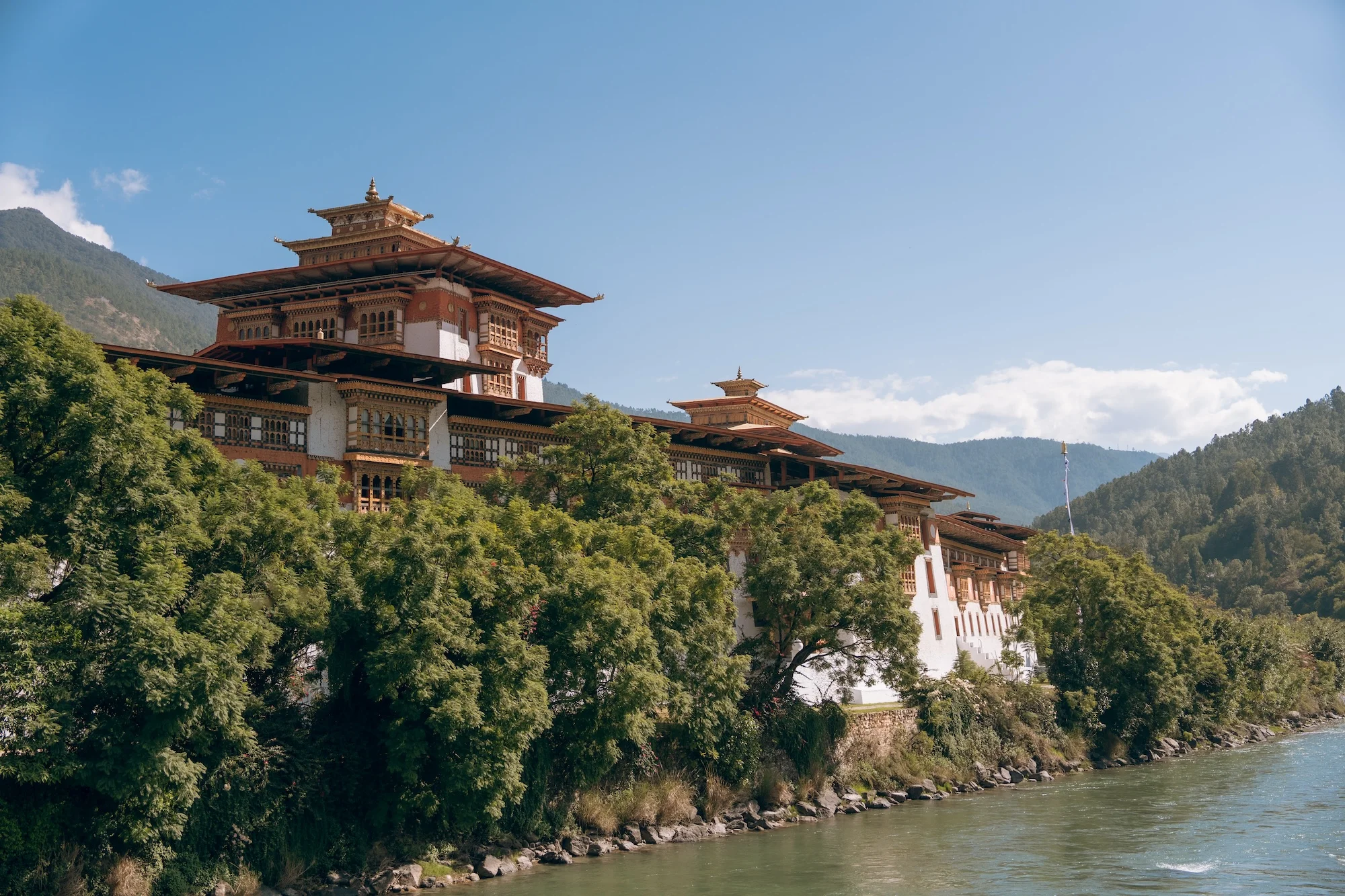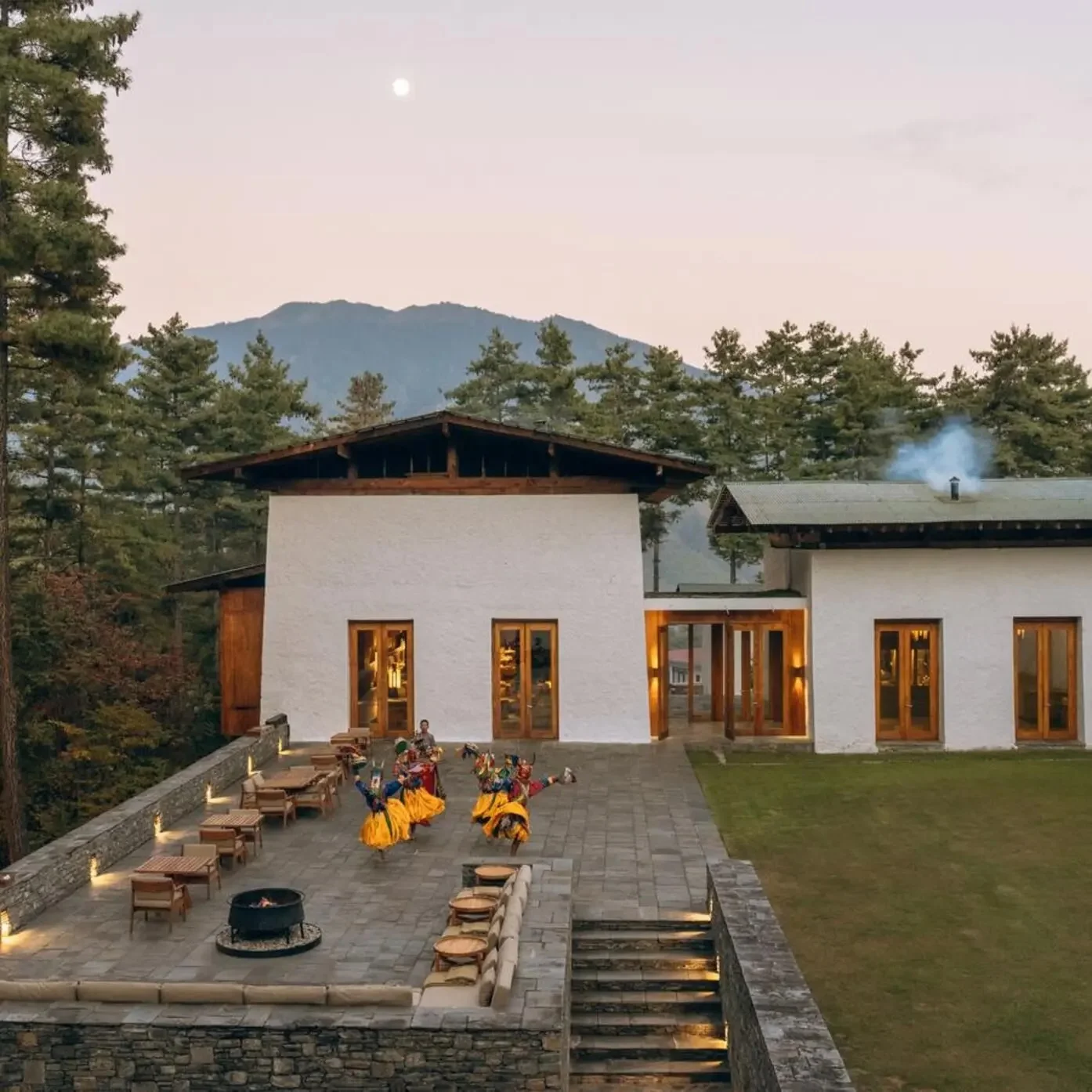
Amankora spans five lodges across Bhutan's central and western valleys — Paro, Thimphu, Punakha, Gangtey and Bumthang — each with its own peaceful spa built around Himalayan plant- and herb-based therapies. Interiors are scented with cedarwood, used both as Buddhist temple incense and as a traditional Bhutanese remedy for respiratory, skin and circulatory conditions, and each lodge's signature treatment reflects its own regional character: a hot oil head massage rooted in Ayurveda at Thimphu, a holistic facial at Punakha, and a candlelit hot stone bath in a stone hut near Gangtey with valley views through bamboo sliding doors. Days typically open with complimentary morning yoga in dedicated mountain-view studios, and monks from Bhutan's monasteries frequently visit to lead meditation sessions and offer blessings to guests.
The Paro Lodge has recently expanded its wellness offering most significantly, adding two Aman Signature Spa Houses alongside its existing two-storey spa, yoga studio and hot stone baths. The Banya, built in Canadian hemlock, draws on Eastern European and Scandinavian bathing traditions, using birch-leaf bundles to massage and exfoliate before a cold plunge on an outdoor terrace overlooking the river, while the Hammam recreates Roman, Turkish and Moroccan bathing ritual with a double treatment room, a steam room, an outdoor pool and a cold plunge, using river stones heated and lowered into the bath alongside local Khempa herbs. An in-house wellness advisor with a background in endocrinology and mind-body medicine also offers holistic healing treatments at the Paro and Thimphu lodges, spanning moxibustion acupuncture and meridian therapy.
Wellness at Amankora extends well beyond the spa buildings into the surrounding Himalayan landscape and Bhutanese culture. Guided forest bathing walks, prayer-flag meditation, archery lessons and monastery visits are woven into the broader guest experience, and each lodge periodically hosts immersive wellbeing retreats led by visiting international wellness experts and yoga teachers. Culinary offerings draw on fresh local ingredients like yak meat and Bumthang Valley honey served across Bhutanese, Western and Indian menus, rounding out an approach to wellness that treats cultural immersion, spiritual practice and physical treatment as inseparable parts of the same journey rather than separate amenities.