
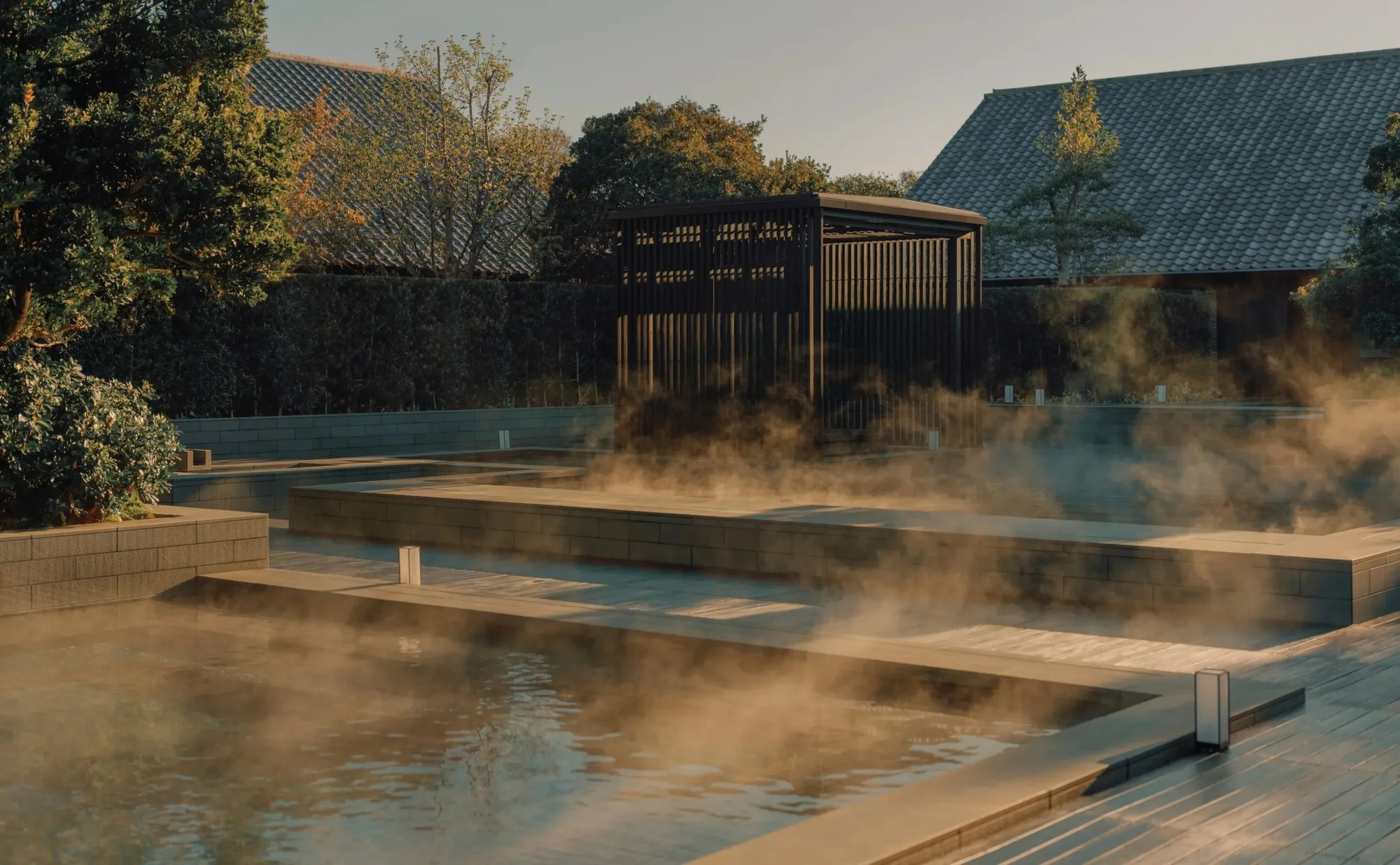
Amanemu sits against the forested hills of Ise-Shima National Park in Japan's Mie Prefecture, overlooking Ago Bay, and every accommodation — whether suite or villa — features its own private onsen bath and wooden decked terrace, extending the resort's hot-spring identity into the rooms themselves. At the center of the property is the 2,000-square-meter Aman Spa, built around a vast hot-spring bath fed by the mineral-rich waters of Ise-Shima and rooted in Japan's sixth-century onsen bathing tradition — the same waters said to have restored samurai after battle. Two private onsen pavilions and daybeds arranged around a thermal spring garden give guests both communal and secluded ways to take to the water, alongside an Aqua Movement Suite offering watsu and other water-based therapies, a dry sauna and a steam room.
Treatments draw heavily on kampo, Japan's centuries-old herbal healing discipline rooted in Traditional Chinese Medicine, which emphasizes restoring balance between body and mind through plant-derived remedies. Amanemu's therapists blend kampo herbs, organic Aman Skincare formulations and locally sourced essential oils into bespoke treatments using seasonal ingredients like pearl powder, seaweed and local herbs; the resort's signature seasonal spa journeys go furthest in this direction, built specifically around the shifting Japanese seasons to rebalance body and mind throughout the year. Four treatment suites and a fitness centre round out the spa's physical offering, with bicycles available at reception for guests wanting to explore the surrounding grounds between sessions.
For a more structured stay, Amanemu offers bespoke, multi-day Immersions combining private movement sessions, specialist therapy, spa treatments and complete nutritional support tailored to individual wellbeing goals. Guests with less time can opt for the Wellness Day Program, a single-day retreat that opens with a private movement lesson, followed by a spa treatment and a session with a wellness specialist, rounded out with access to the onsen waters and relaxation facilities. Dining reinforces the same seasonal, restorative philosophy — most notably the Ise Jingu Shrine Breakfast, inspired by the traditional meal served to monks at the nearby shrine — positioning food as a continuation of the resort's broader wellness approach rather than a separate amenity.


